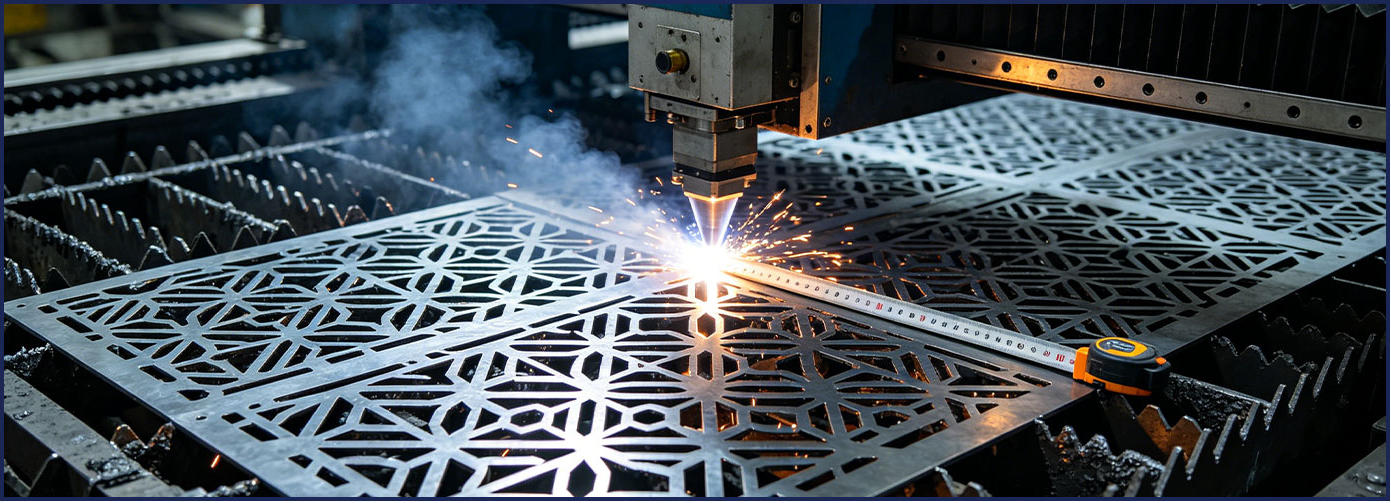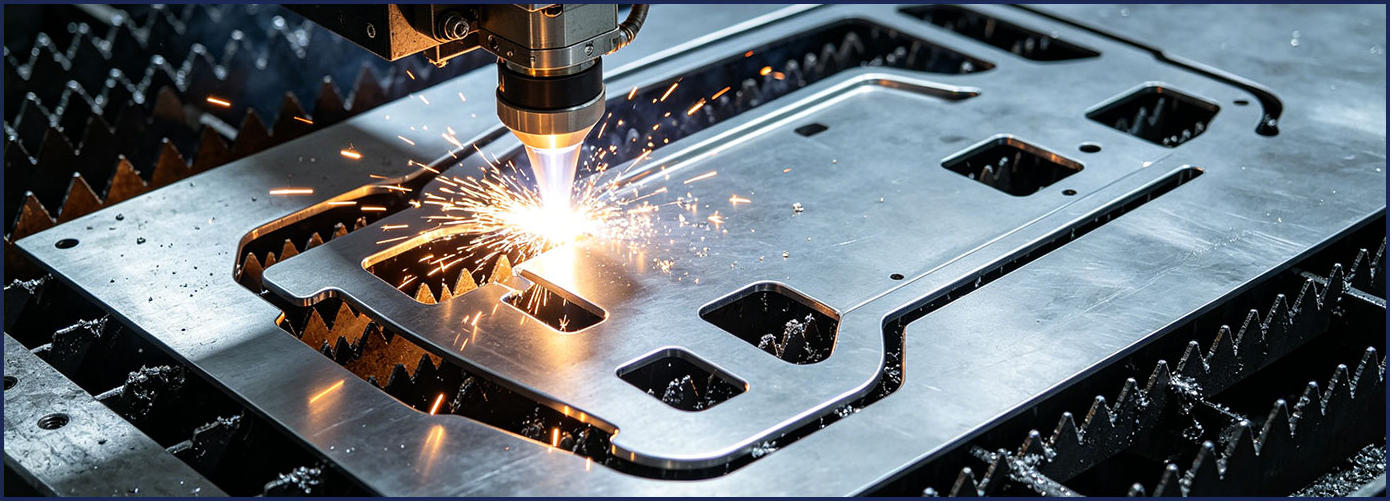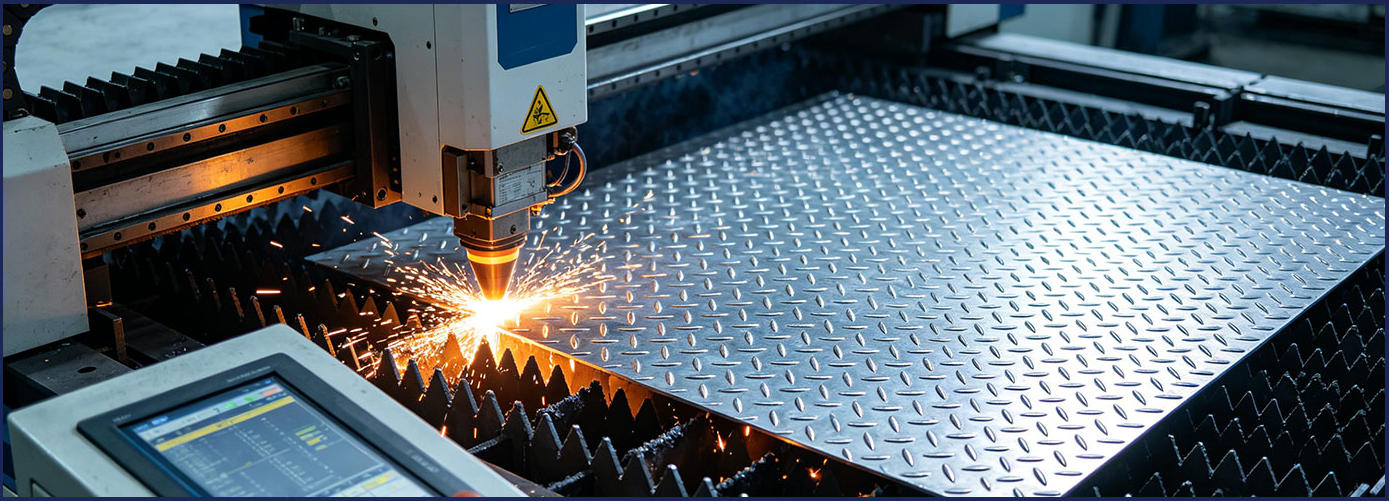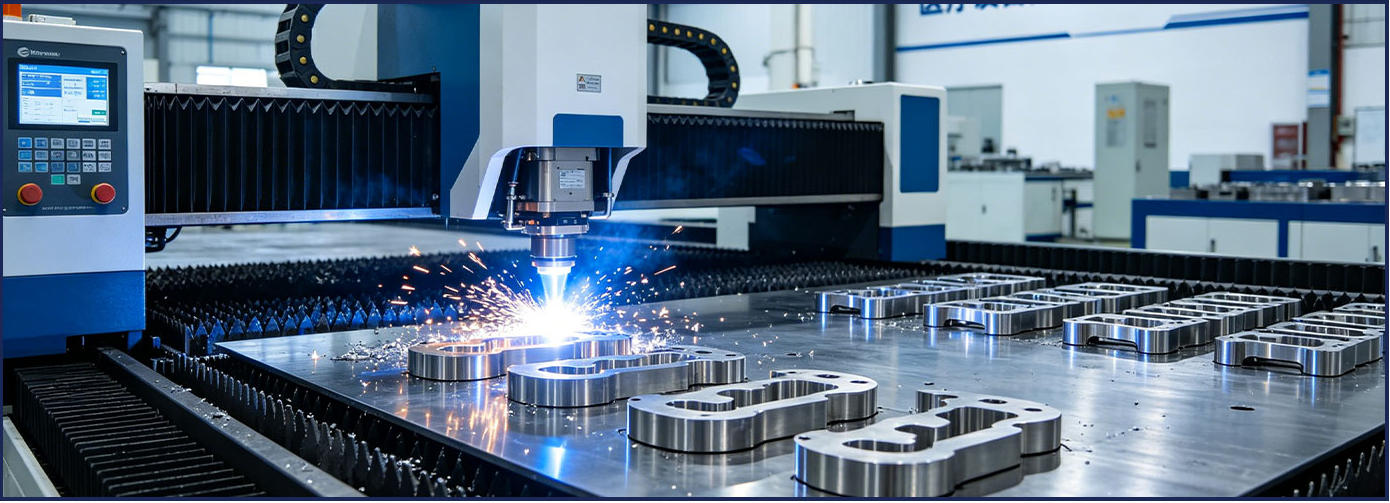

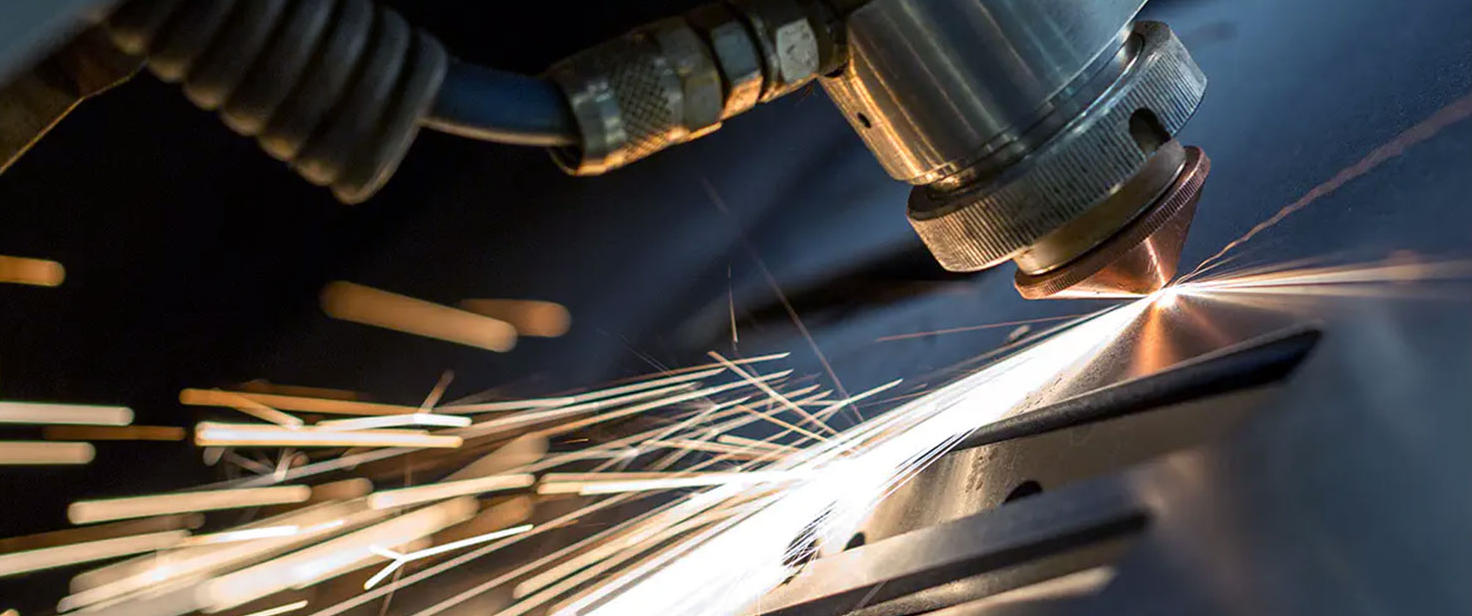
Unlike traditional cutting methods, laser cutting avoids physical contact with the material, effectively reducing material deformation and ensuring cutting accuracy. Its core process logic is to convert electrical energy into laser energy, focus it into a high-energy beam, and use thermal effect to realize material cutting.
The specific process flow is divided into 5 key steps:
① Material Preparation: Select the appropriate metal material (stainless steel, carbon steel, aluminum, etc.) and process it into the required size of the base material, and clean the surface to remove oil, rust, and debris.
② Parameter Setting: According to the material type, thickness, and cutting requirements, set the laser power, cutting speed, gas pressure, and focus position through the control system.
③ Laser Generation and Focusing: The laser generator emits a laser beam, which is transmitted through the optical fiber and focused by the lens to form a small-diameter, high-energy density beam.
④ Cutting Execution: The focused laser beam acts on the material surface, melting or vaporizing the material, and the high-pressure gas blows away the molten material to form a cutting seam.
⑤ Post-processing: After cutting, the product is deburred, polished, and cleaned to ensure the smoothness of the cutting surface and meet the product quality standards.