Surface Finishing

Surface Treatment Processes for Metal Products: HDG, Pickling, Polishing, Coating & Anodized

We boast a professional team responsible for procurement and quality control. Beyond manufacturing metal wire mesh, perforated metal sheets, perforated metal filter elements, and wedge wire screens in-house, we also partner with highly reliable factories to fulfill a diverse range of surface finishing requirements our clients frequently request. These include hot-dip galvanizing, electrolytic polishing, pickling, powder coating, PVDF coating, and anodizing.
Surface-Finishing

Hot-Dip Galvanizing (HDG)

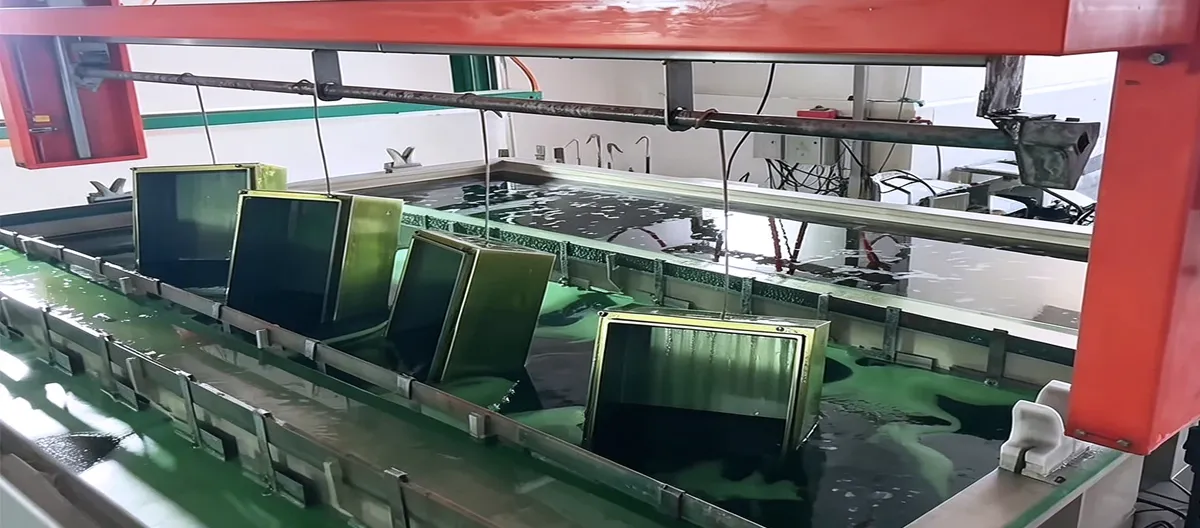
Hot-dip galvanizing involves submerging metal components into a bath of molten zinc at approximately 450 °C (842 °F). This process causes zinc compounds to form a protective layer on the metal’s surface, effectively safeguarding it against corrosion. The procedure comprises three core stages: surface preparation, galvanizing, and inspection.
Compared to alternative galvanization methods, hot-dip galvanizing offers a cost-effective solution. Its superior corrosion resistance makes it indispensable for applications in agriculture, industry, automotive, construction, solar energy, and other harsh, wet, or corrosive environments. A prime example is our strut plank grating, which is treated with this process.
We strictly adhere to the international standard ISO 1461:1999, the American Society for Testing and Materials standard ASTM A123/A123M, and the domestic standard GB/T 13912-2002.

Advantages

- Cost-effective: Offers excellent value for money.
- Thick Coating: Provides a robust zinc layer for enhanced protection.
- Superior Corrosion Resistance: Prolongs the service life of components significantly.
- Good Adhesion: The coating bonds well and allows for subsequent processing like welding and touch-up coating.

Disadvantages

- Environmental Impact: The process involves harsh conditions and generates pollution.
- Uneven Coating: While the layer is thick, it can be inconsistent in thickness.
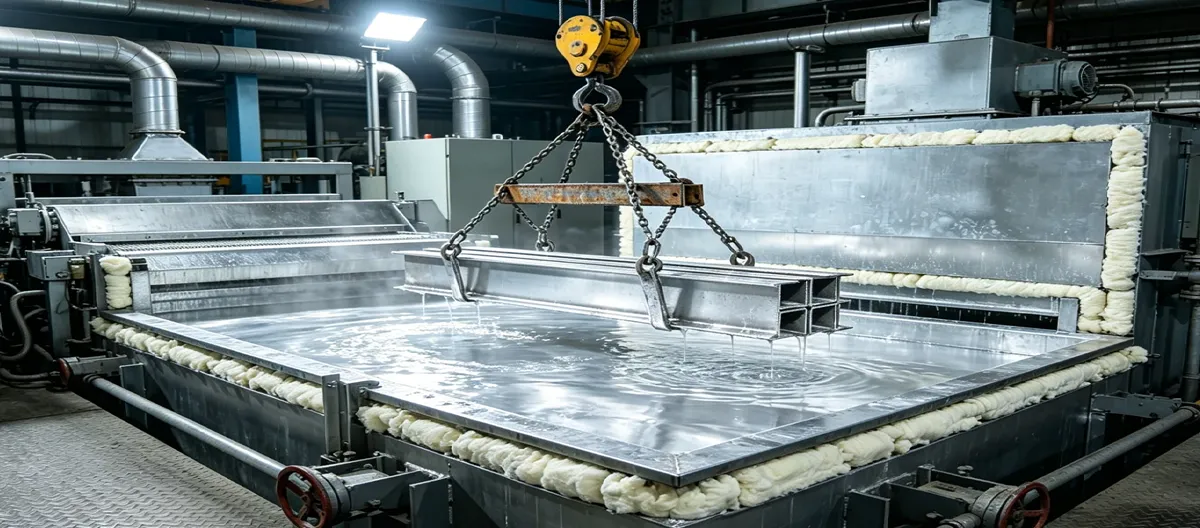
Hot-Dip Galvanizing (HDG)

Pickling

Pickling is a pre-treatment process that uses acid solutions to remove scale, oxides, and corrosive residues from steel surfaces. It also cleans oil and contaminants, preparing the metal for subsequent processes such as electroplating and rolling. Our wedge wire screens undergo pickling as part of their production.
We strictly comply with the international standard ISO 27831 and the domestic standard JB/T 6978.

Advantages

- Simple & Economical: The process is straightforward to operate and cost-efficient.
- Improved Surface: Results in a cleaner and smoother surface finish.
- High Quality: Reduces surface residue, leading to superior final product quality.

Disadvantages

- Handling Challenges: Its corrosive nature makes safe handling difficult, and it is not suitable for all steel types.
- Waste Management: The treatment of spent acid and recycling of resources is complex.
- Adhesion Risk: May compromise the adhesion of subsequent galvanized layers.

Pickling

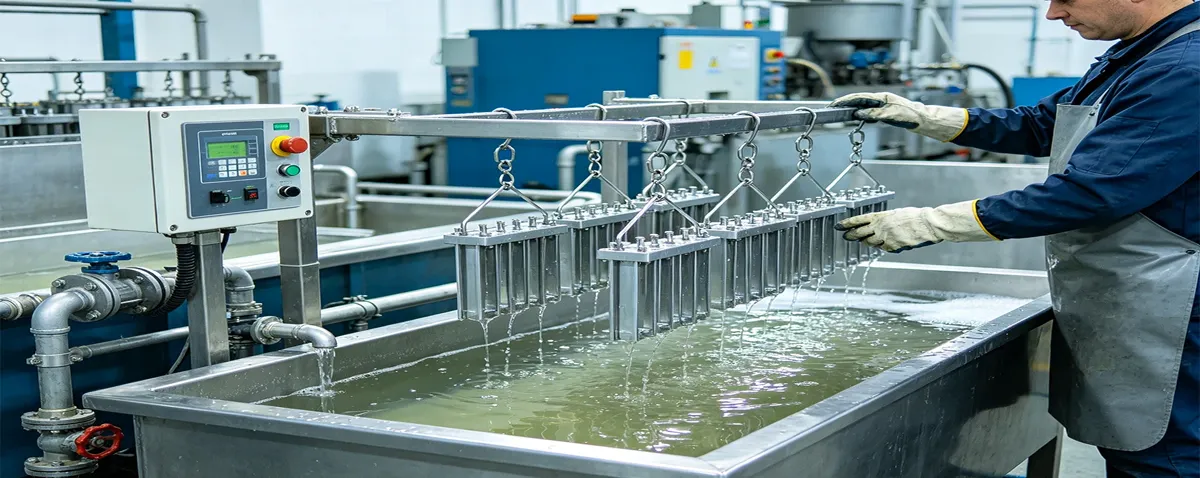
Electrolytic Polishing

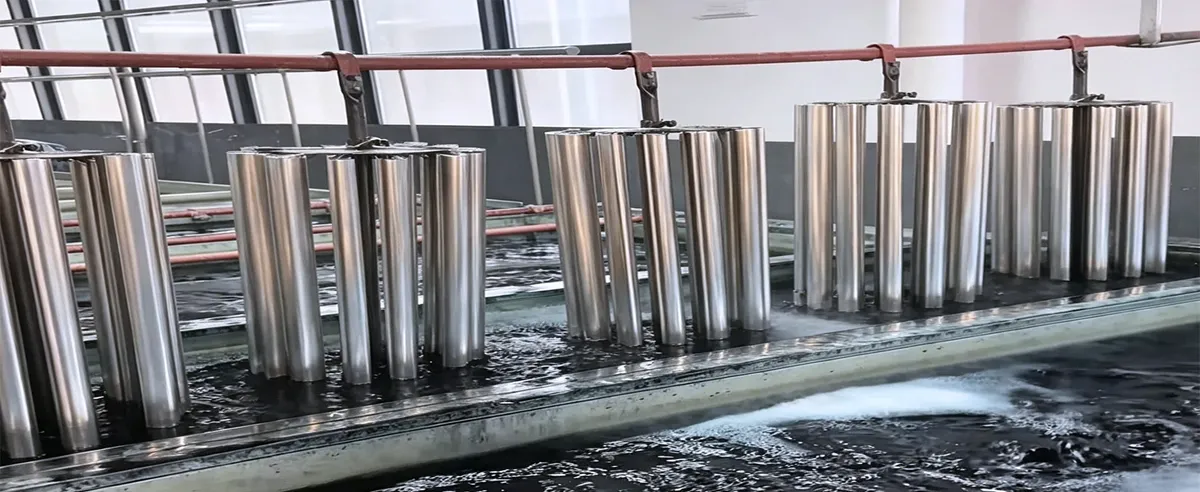
An electrochemical finishing technique, electrolytic polishing uses the polished workpiece as the anode and an insoluble metal as the cathode. Both electrodes are immersed in an electrolyte bath. Direct current ionization causes selective anodic dissolution, removing fine burrs and brightening the workpiece’s surface. This yields a shiny, ultra-smooth, and immaculate finish. Our wedge wire screens receive this treatment for a premium appearance.
We strictly follow the standard ASTM B912 and the domestic standard YB/T 4377-2014.

Advantages

- Consistent Finish: Delivers a uniform, long-lasting luster.
- Efficient & Scalable: High production efficiency, low cost, and suitable for mass production.
- Corrosion Resistance: Enhances the surface’s corrosion resistance, compatible with all stainless steel grades.

Disadvantages

- Parameter Complexity: Numerous variables affect the process, making optimization challenging.
- Material Limitations: Less effective on materials like cast iron or those with inclusions.
- Safety & Complexity: The electrolyte composition is complex, requiring strict operational safety protocols.

Electrolytic Polishing

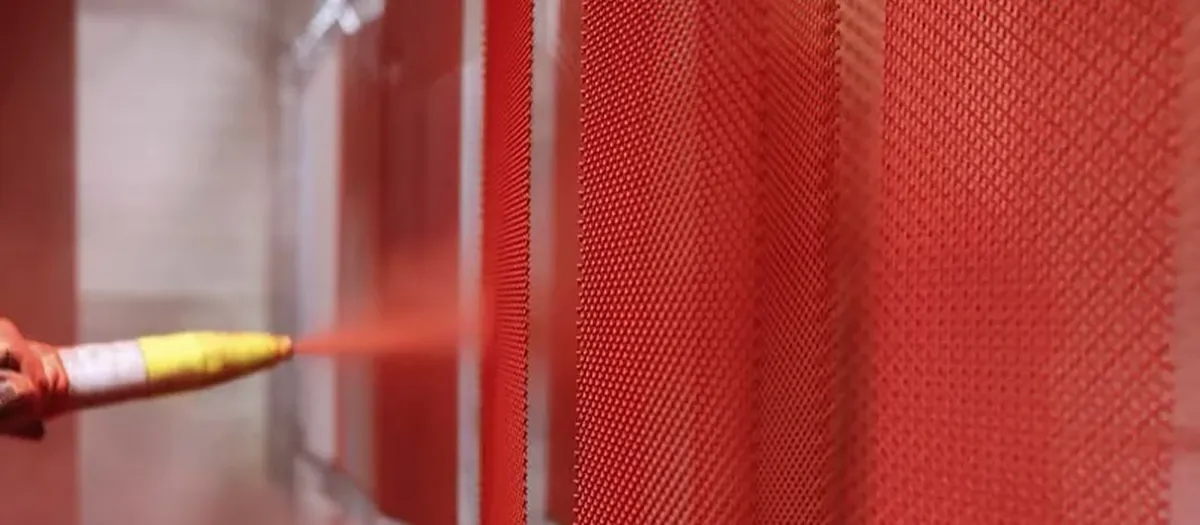
PVDF Coating

Polyvinyl difluoride (PVDF) coating is applied via liquid spray guns. As a leading fluoropolymer coating, it is highly inert, chemically stable, and boasts exceptional resistance to UV radiation, moisture, and temperature fluctuations—making it ideal for commercial and industrial applications. Our decorative perforated plates frequently feature this coating.
We strictly test product quality according to the standard HG/T 3793-2019.

Advantages

- UV & Fade Resistant: Maintains color integrity and does not fade over time.
- Superior Protection: Offers excellent adhesion, abrasion resistance, and chemical/solvent resistance.
- Fire Retardant: Self-extinguishing properties and low smoke emission in fires.

Disadvantages

- Finish Limitation: Typically only available in matte finishes.
- Higher Cost: More expensive compared to powder coating.

PVDF Coating

Anodizing

Primarily used for aluminum and its alloys, anodizing is an electrochemical process that creates a protective aluminum oxide (Al₂O₃) film on the metal’s surface. Unlike paint or plating, this oxide layer is integral to the substrate, rather than being applied on top—ensuring it will not chip or flake. Decorative aluminum punch plates commonly use anodizing for corrosion protection and aesthetic enhancement.
We strictly implement the standard GB/T 12967 and the military standard detection method MIL-8625F.

Advantages

- Low Maintenance: Easily cleaned with water and mild detergents to restore shine.
- Wear & Corrosion Resistant: Withstands long-term use and environmental stress.
- Integral Coating: The oxide layer is part of the metal, ensuring permanence.
- Eco-friendly: Considered one of the most environmentally safe industrial processes.

Disadvantages

- Finish Options: Limited to matte and polished finishes.
- Batch Variation: Color and finish consistency between different production batches may be around 95%.
- Environmental Sensitivity: Surfaces in urban areas may be prone to acid contamination.

Anodizing