Perforated metal mesh is a versatile and widely applied metal screen product across construction, industrial filtration, safety protection, architectural decoration and other industries. Choosing the right perforated metal mesh material is critical, as it directly affects the product’s service life, performance stability, durability and overall cost. This guide breaks down the most common materials for perforated metal mesh, highlights their core characteristics, and provides targeted material recommendations for diverse application scenarios, helping you pick the optimal perforated mesh for your project needs.
Common Perforated Metal Mesh Materials & Key Performance Traits
1.1 Low Carbon Steel Plate (Cold-Rolled / Hot-Rolled Steel)
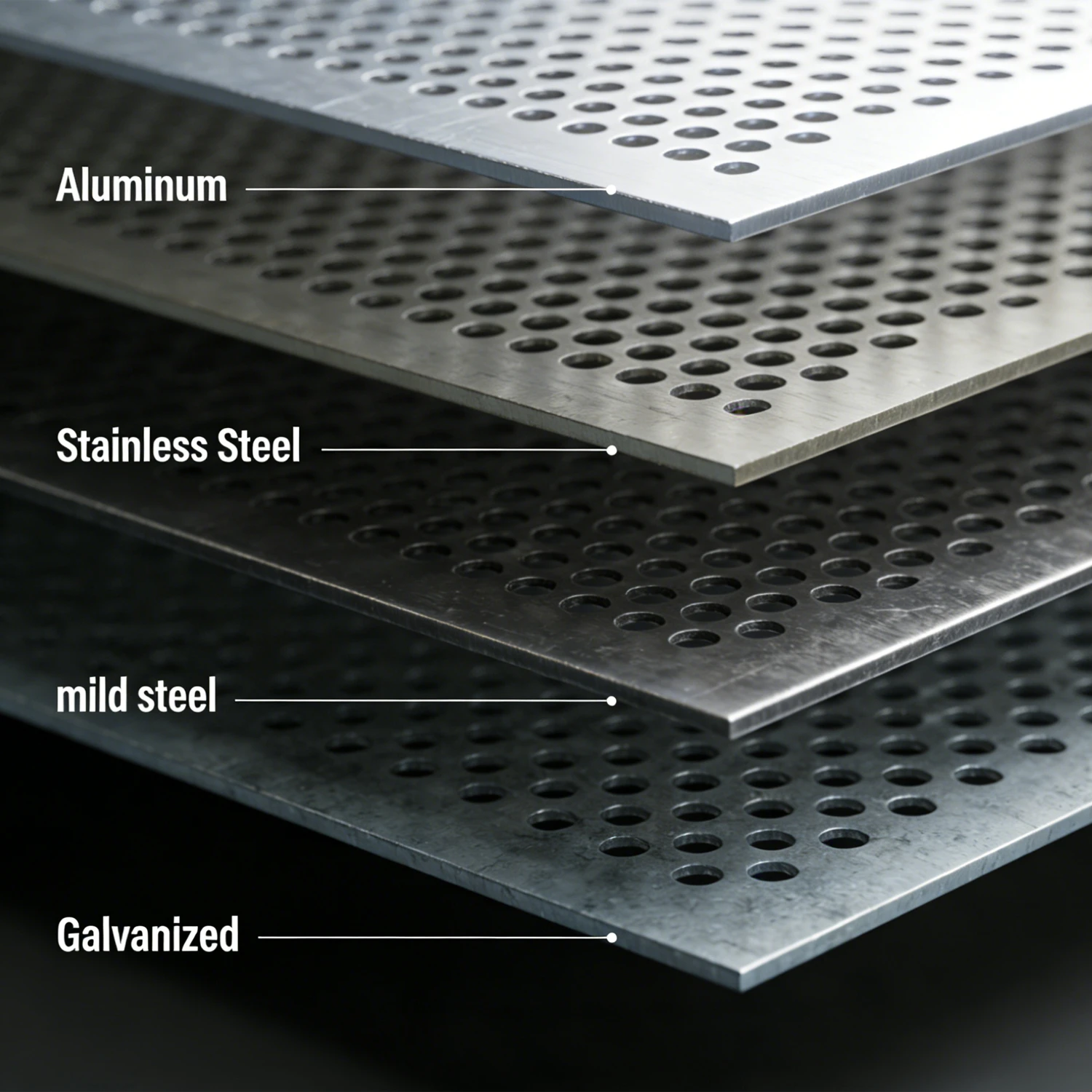
Low carbon steel (cold-rolled/hot-rolled steel) is the most economical and basic material for perforated metal mesh, offering great plasticity, easy stamping formability and low production costs, making it perfect for mass conventional perforation. As a raw material, plain low carbon steel perforated metal mesh has weak rust and corrosion resistance, so it typically requires extra surface treatments like spray painting or powder coating to enhance outdoor and long-term durability. This budget-friendly option is ideal for indoor applications or low-corrosion environments with no strict anti-rust demands, serving as the go-to choice for standard, cost-effective perforated metal mesh products.
1.2 Galvanized Steel Plate
Galvanized steel plate is low carbon steel coated with a protective zinc layer, available in electro-galvanized and hot-dip galvanized variants. Galvanized perforated metal mesh delivers far better rust resistance and weather resistance than plain low carbon steel, eliminating the need for complex secondary surface treatments. With a moderate cost premium over cold-rolled steel, it balances affordability and practicality perfectly, making it suitable for outdoor light-duty use, indoor dry spaces, and general industrial applications requiring basic corrosion protection and long-lasting performance.
1.3 304 Stainless Steel
304 stainless steel is the most popular and versatile stainless steel grade for perforated metal mesh, boasting exceptional corrosion resistance, oxidation resistance and mild acid-alkali resistance. 304 stainless steel perforated metal mesh stands up to humid environments, outdoor exposure, rain and sunlight without rusting or degrading, while offering high structural strength and deformation resistance. With a clean, sleek finish, it requires no additional surface treatment, making it the top pick for hygiene-focused and corrosion-resistant applications, from food processing to industrial filtration.
1.4 316 Stainless Steel
316 stainless steel is a premium corrosion-resistant material for perforated metal mesh, enhanced with molybdenum to deliver superior seawater resistance, strong acid-alkali resistance and high-temperature stability compared to 304 stainless steel. Engineered for extreme harsh environments, 316 stainless steel perforated metal mesh offers unparalleled durability in demanding conditions, though it comes with a higher price tag. It is the ideal choice for specialized heavy-duty, marine and chemical applications where standard stainless steels fail to perform reliably.
1.5 Aluminum Plate / Aluminum Alloy Plate
Aluminum and aluminum alloy plates are lightweight options for perforated metal mesh, weighing just one-third of steel, with good corrosion resistance, ductility and easy machinability. Aluminum perforated metal mesh features a refined appearance and supports decorative finishes like anodizing, plus it is non-magnetic with excellent thermal conductivity. While lower in structural strength than steel, it excels in lightweight, decorative and low-load architectural applications where weight reduction and aesthetic appeal are top priorities.
Perforated Metal Mesh Material Recommendations by Application Scenario
2.1 Indoor Conventional Scenarios (Interior Decoration, Machine Guards, Shelf Partitions)
Recommended Materials: Low Carbon Steel Perforated Metal Mesh, Galvanized Perforated Metal Mesh. Indoor conventional scenarios such as interior decoration, machine safety guards and shelf partitions feature dry, non-corrosive environments with minimal anti-corrosion needs. Low carbon steel perforated mesh keeps costs ultra-low with basic spray coating for basic protection; galvanized perforated mesh adds better rust protection with zero extra finishing, delivering unbeatable cost efficiency for routine indoor use and daily industrial applications.
2.2 Outdoor General Scenarios (Building Curtain Walls, Guardrails & Enclosures, Road Sound Insulation, Equipment Covers)
Recommended Materials: Galvanized Perforated Metal Mesh, 304 Stainless Steel Perforated Metal Mesh. Outdoor general uses including building curtain walls, safety guardrails, road sound barriers and equipment enclosures demand reliable weather resistance and long service life. Galvanized perforated mesh is the cost-effective pick for short-term outdoor use; for long-term outdoor exposure, coastal mild-humid areas or high durability requirements, 304 stainless steel perforated metal mesh is the optimal solution, offering lasting rust resistance and minimal maintenance.
2.3 Anti-Corrosion & Hygienic Scenarios (Food Processing, Pharmaceutical Equipment, Water Treatment Filtration, Kitchen Utensils)
Recommended Material: 304 Stainless Steel Perforated Metal Mesh. Anti-corrosion and hygienic scenarios like food processing lines, pharmaceutical equipment, water treatment filtration and kitchen utensils require strict sanitary standards and corrosion protection. 304 stainless steel perforated metal mesh is non-toxic, odorless, easy to clean and corrosion-proof, preventing product contamination and complying with food and pharmaceutical industry hygiene norms, while delivering sturdy structural performance for filtration and protection.
2.4 Extreme Harsh Scenarios (Seawater Environments, Chemical Equipment, Strong Acid & Alkali Working Conditions)
Recommended Material: 316 Stainless Steel Perforated Metal Mesh. Extreme harsh environments such as marine/offshore facilities, chemical processing equipment and strong acid-alkali working conditions demand maximum corrosion resistance and heavy-duty durability. Standard stainless steels cannot withstand seawater or harsh chemical corrosion, but 316 stainless steel perforated metal mesh maintains stable performance, resists rust and damage even under long-term corrosive exposure, ensuring reliable equipment operation in the toughest industrial settings.
2.5 Lightweight & Decorative Scenarios (Indoor Ceilings, Storefront Decoration, Display Racks, Lamp Shades)
Recommended Materials: Aluminum/Aluminum Alloy Perforated Metal Mesh. Lightweight and decorative applications including indoor ceilings, storefront decor, display racks and lamp shades prioritize aesthetic appeal, easy installation and structural load reduction. Aluminum perforated metal mesh is lightweight for hassle-free transport and mounting, cutting down on overall structural burden; it also offers a sleek, modern look with customizable anodized finishes, and resists indoor moisture, perfectly fitting decorative and lightweight architectural project needs.
Selecting the right perforated metal mesh material boils down to matching your application environment, corrosion resistance needs, load-bearing requirements and project budget. By following the “scenario-led material selection” rule, you can maximize product performance, cut unnecessary costs and extend the service life of your perforated metal mesh. Whether you need industrial-grade perforated metal mesh, decorative perforated panels or corrosion-resistant perforated screens, choosing the correct material ensures long-lasting, reliable performance for every commercial or industrial project.